Canon Printer Error 6000: Causes and How to Fix It
Canon printer Error 6000 can appear when some supported models encounter a problem during normal paper handling or printer operation. Depending on the exact model and circumstances, paper feeding, a jam, debris, or another obstruction may be worth checking. Because the exact procedure can vary by Canon model, start with safe and user-accessible troubleshooting.
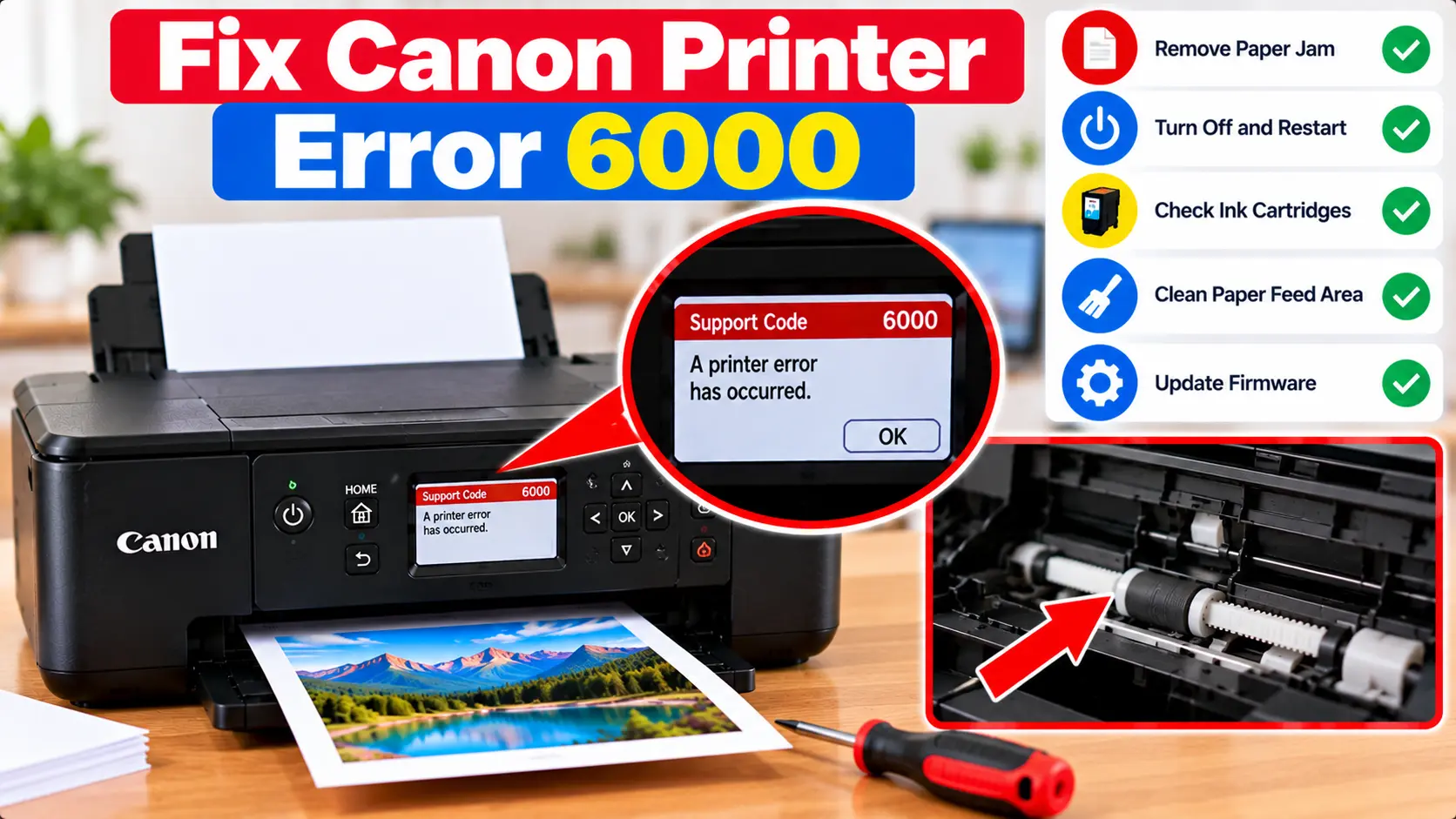
How Do I Troubleshoot Canon Error 6000?
Start by turning the printer off normally and checking the paper input, output, and other user-accessible paper areas for jammed sheets, torn paper, or obvious obstructions. Confirm that paper is loaded correctly and that trays are positioned normally. Restart the printer after the checks. If Error 6000 returns, use troubleshooting appropriate for your exact Canon model.
What Does Canon Printer Error 6000 Mean?
On some Canon printer models, Error 6000 can be associated with a condition that interrupts normal printer or paper-feed operation. A paper-related obstruction or feeding problem may therefore be among the first things to inspect.
However, the exact meaning and recommended procedure should not be assumed to be identical for every Canon model. Always consider the complete message displayed by the printer and the exact model number.
Possible Causes of Canon Error 6000
Depending on the printer model and situation, possible factors worth checking include:
- Paper that did not feed correctly.
- A jammed or partially jammed sheet.
- Torn paper remaining in an accessible paper path.
- Paper loaded incorrectly in the input tray.
- Too much paper loaded at once.
- An obvious foreign object in a user-accessible paper area.
- A tray or cover that is not in its normal operating position.
- A condition requiring model-specific diagnosis.
1. Restart the Canon Printer
If Error 6000 appeared unexpectedly, begin with a normal restart.
- Stop sending new print jobs.
- Turn the printer off using its normal power control.
- Allow it to complete the shutdown process.
- Check for visible paper or obstruction problems.
- Turn the printer back on.
- Wait for startup to finish before sending a new print job.
If 6000 appears again, continue with the checks below.
2. Check for Jammed or Torn Paper
Inspect the printer's normal user-accessible paper areas. Depending on your model, these may include the input area, output area, and normal jam-access points.
Look for:
- A full sheet stuck in the paper path.
- A folded or crumpled sheet.
- Small torn pieces of paper.
- Labels or scraps that are clearly out of place.
If paper is clearly visible through a normal jam-clearing area, remove it slowly using the procedure intended for your printer.
You can also review our Canon printer paper jam troubleshooting guide .
3. Check How the Paper Is Loaded
If there is no visible jam, inspect the paper supply. Poorly loaded paper can interfere with reliable feeding.
Check that:
- The paper stack is straight.
- Sheets are not heavily curled, folded, or damaged.
- The tray is not overloaded.
- Paper guides are positioned appropriately for the paper size without crushing the stack.
- The paper type and size are suitable for the tray being used.
Reload a smaller, neat stack if the paper appears uneven or difficult to feed.
4. Check for an Obstruction in Accessible Areas
Small objects can sometimes interfere with paper movement. Inspect only areas that are intended to be accessed by the user.
Look for obvious items such as:
- Paper fragments.
- Loose labels.
- Packaging material.
- Other clearly visible foreign material.
Remove an item only if it can be safely reached without dismantling the printer or forcing an internal mechanism.
5. Check Paper Trays and Printer Covers
After clearing paper or reloading the printer, confirm that the normal user-operated trays and covers are returned to their correct positions.
A tray that is not seated normally or a cover that remains open can interfere with the printer's startup or paper-handling process on some models.
Do not force a tray or cover if it does not fit normally. Check for paper or another object blocking it.
Canon Error 6000 Appeared After a Paper Jam
If Error 6000 appeared after you removed a paper jam, inspect the accessible paper path again. A small torn corner or narrow strip of paper can remain behind even when the main sheet has already been removed.
Also make sure that:
- All visible paper fragments are removed.
- Paper is reloaded correctly.
- Trays are returned to their normal positions.
- User-accessible covers are properly closed.
Then restart the printer and allow it to complete startup before attempting another print.
Do Not Force Rollers, Gears, or Printer Mechanisms
If a roller, gear, cartridge holder, or another internal mechanism appears stuck, do not force it to move.
A component that resists movement may be blocked or may not be designed for manual movement in its current position.
What If Canon Error 6000 Keeps Returning?
If Error 6000 remains after a normal restart and safe paper-path inspection, collect more information before attempting additional steps.
Record:
- The exact Canon printer model.
- The complete Error 6000 message.
- Any additional support code.
- Whether a paper jam occurred before the error.
- Whether paper feeds at all.
- Whether the printer makes an unusual sound during startup or paper feeding.
If no safe user-accessible obstruction is visible and the error continues, the next troubleshooting procedure should be based on the exact printer model rather than repeated generic reset attempts.
Canon Error 6000 Troubleshooting Table
| Situation | What to Check |
|---|---|
| Error 6000 appears suddenly | Restart normally and check accessible paper areas for jams or obvious obstructions. |
| Printer will not feed paper | Check the paper stack, tray, guides, visible paper path, and accessible obstructions. |
| Error appears after a paper jam | Inspect for small torn pieces and confirm covers and trays are back in their normal positions. |
| Paper feeds crooked | Reload a neat paper stack and check paper-guide positioning. |
| An internal part appears stuck | Do not force it. Check only for safely removable visible obstructions. |
| Error 6000 keeps returning | Record the exact model and complete error message and move to model-specific diagnosis. |
Related Canon Printer Error Guides
Frequently Asked Questions
What does Error 6000 mean on a Canon printer?
On some Canon models, Error 6000 can be associated with a condition affecting normal printer or paper-feed operation. The exact meaning and procedure can vary by model.
How do I fix Canon printer Error 6000?
Start with a normal restart. Check user-accessible paper areas for jammed or torn paper, confirm the paper is loaded correctly, and look for obvious safely removable obstructions. If the error remains, use troubleshooting for your exact model.
Can a paper jam cause Canon Error 6000?
A paper jam or paper-related obstruction may be relevant on some Canon models. If the error appeared after a jam, inspect accessible areas for small pieces of paper that may remain.
Why does Error 6000 return after removing paper?
A small paper fragment may remain, paper may have been reloaded incorrectly, or another condition may still be affecting the printer. Recheck user-accessible areas without forcing internal mechanisms.
Should I manually turn the printer rollers?
Do not force rollers, gears, or other internal mechanisms. Use only the normal paper-removal and maintenance procedures intended for your exact printer model.
What if Canon Error 6000 will not clear?
Record the exact printer model, complete error message, recent paper-jam history, and any unusual symptoms. Persistent errors may require model-specific diagnosis beyond general user-level checks.
Final Canon Error 6000 Checklist
- Confirm the exact Canon printer model.
- Read the complete Error 6000 message.
- Restart the printer normally.
- Check for jammed paper.
- Look for small torn paper fragments.
- Reload the paper neatly.
- Check paper guides and tray position.
- Check user-accessible areas for obvious obstructions.
- Do not force rollers, gears, or internal mechanisms.
- Use model-specific diagnosis if Error 6000 continues.